CBAM 2026: mechanism, calculation, and declaration
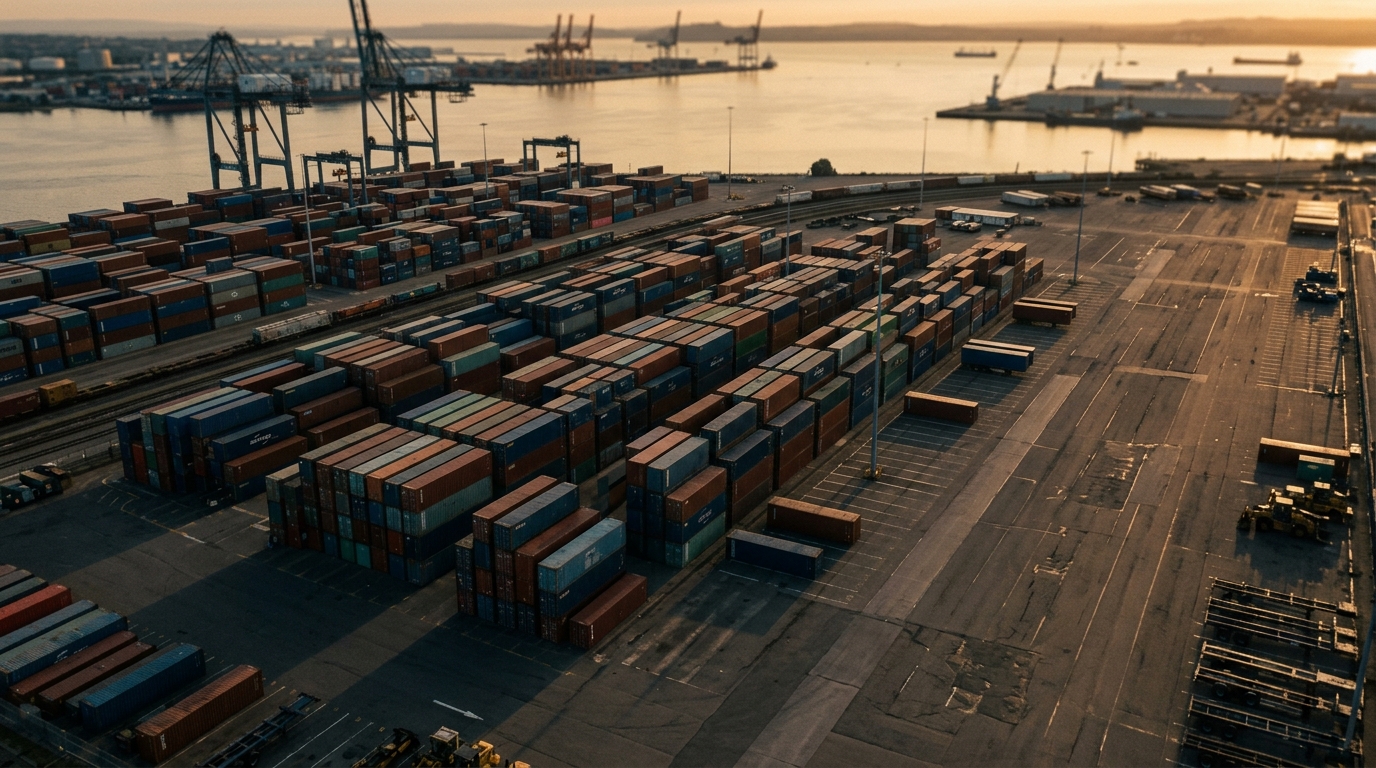
The CBAM entered its definitive phase on January 1, 2026: affected importers must now track the emissions embedded in their goods and prepare to surrender the corresponding certificates. For imports made in 2026, the first CBAM declaration and certificate surrender must be completed by September 30, 2027, at the latest.
The CBAM applies a carbon price to certain imports
The Carbon Border Adjustment Mechanism (CBAM) aims to align the carbon cost of certain imported products with that borne by European producers subject to the European Union Emissions Trading System.
According to the European Commission on the definitive CBAM regime, the importer declares the emissions embedded in the goods and then surrenders a corresponding number of certificates. A carbon price effectively paid in the country of production may be taken into account, provided the required supporting documentation is available.
The CBAM scope depends on the product's customs code
The CBAM covers goods precisely identified by their customs nomenclature, rather than all imports generally associated with an industrial sector. The CFO must therefore start with the Combined Nomenclature codes used in customs declarations.
The Directorate-General for Customs and Indirect Taxes lists the categories currently covered:
- cement;
- iron and steel;
- aluminum;
- fertilizers;
- electricity;
- hydrogen.
Processed products and certain precursors may also fall under the regulation if they are listed in Annex I. A company must verify the exact customs code, non-preferential origin, and the customs regime applied to each flow.
The 50-tonne threshold does not apply to all sectors
The annual threshold is set at 50 cumulative tonnes per importer for cement, fertilizers, iron and steel, and aluminum. The calculation sums the net masses imported across these four categories during the calendar year.
The European Regulation 2025/2083 specifies that exceeding the threshold makes the obligations applicable to all relevant goods imported during the year, including those brought in before the threshold was crossed. The mass threshold does not cover electricity or hydrogen: importers of these must assess their obligations without applying this exemption.
An annual dashboard must therefore consolidate imports at the company level. Tracking by individual supplier, operating subsidiary, or freight forwarder risks masking the fact that the cumulative threshold has been exceeded.
Authorized CBAM declarant status is a prerequisite for relevant imports
An importer exceeding the threshold, or their indirect customs representative when they accept this role, must hold authorized CBAM declarant status. In France, the process is carried out via the European CBAM registry after authorization of the company's customs account.
The French portal for accessing the definitive CBAM registry allows for the submission of authorization requests and, starting in 2027, annual declarations. Regulatory responsibility remains with the authorized declarant, even when another party physically prepares or submits the declaration on their behalf.
CBAM calculation is based on the emissions embedded in each product
The calculation links imported quantities to an emission intensity expressed per tonne of product, or per megawatt-hour for electricity. It must be performed by product type, production facility, and origin.
- Consolidate imported quantities. Customs data must be reconciled with product codes, suppliers, and production facilities.
- Determine emission intensity. The company uses either actual data or the default values published by the Commission under the prescribed regulatory conditions.
- Calculate embedded emissions. The imported quantity is multiplied by the emission intensity applicable to the product.
- Apply regulatory adjustments. The calculation accounts for the free allocation applicable to European producers and, where demonstrated, the carbon price effectively paid in a third country.
- Determine the certificates to be surrendered. The adjusted emissions balance determines the declarant's surrender obligation.
The European Commission on CBAM verification authorizes the use of verified actual data or default emission values. When a company chooses to use actual emissions, these must be verified by an independent verifier accredited by a European national accreditation body.
The price of certificates depends on the European carbon market
The price of a CBAM certificate reflects the average price of allowances auctioned under the European Union Emissions Trading System. The Commission publishes a quarterly price for each quarter of 2026, and a weekly price starting in 2027.
The official CBAM certificate price page indicates a price of 75.36 euros for the first quarter of 2026 and 75.28 euros for the second quarter of 2026. As of August 28, 2026, the prices for the third and fourth quarters have not yet been published.
Certificates corresponding to 2026 imports will be purchased starting in February 2027. From 2027 onwards, the declarant must also ensure, at the end of each quarter, that their account covers at least 50% of the cumulative embedded emissions since the beginning of the year, in accordance with the procedures set out in the regulation.
The 2026 CBAM declaration will be annual
The declaration covering imports made in 2026 must be submitted to the CBAM registry no later than September 30, 2027. The surrender of the corresponding certificates follows the same deadline.
The CBAM declaration must include, in particular:
- the total quantity imported for each type of good;
- the total embedded emissions, expressed in the applicable regulatory unit;
- the number of certificates to be surrendered after the required adjustments;
- verification reports when actual emissions are used;
- information regarding the carbon price paid in a third country, when a reduction is requested.
The competent authority may audit the data and supporting documents. Failure to surrender certificates and importing goods without complying with the applicable obligations exposes the company to the penalties provided for by the regulation.
Preparing your declaration starts with procurement and supplier payments
The reliability of your declaration depends on continuous reconciliation between purchases, customs data, invoices, payments, and emissions information provided by producers. Waiting until the annual closing to track down this data creates a risk of missing documents and uncertain links between an invoice and a specific facility.
For every supplier payment associated with a CBAM product, SMEs and mid-caps can link the supplier, customs code, country of origin, quantity, and production site. This audit trail then makes it possible to consolidate flows and prepare the supporting documentation.
The Keewe approach connects this tracking to payment operations to automate the data collection required for the CBAM declaration. It links the measurement of the carbon impact of international operations to its financing via the Planet Dividend, rather than limiting management to a simple emissions calculation.
The 2026 CBAM Checklist for CFOs
Your compliance plan must cover customs flows, suppliers, emissions, and the financial provision for certificates.
- Extract all customs codes for goods imported since January 1, 2026.
- Identify products included in Annex I of the CBAM regulation.
- Consolidate net masses for cement, fertilizers, iron and steel, and aluminum.
- Verify your status as an authorized CBAM declarant and ensure access to the registry.
- Request the facility of origin and available emissions data from each producer.
- Decide between using verified actual data or default values.
- Document any carbon price already paid in the country of production.
- Estimate financial exposure based on published quarterly prices.
- Organize data validation and archiving ahead of the September 2027 declaration.
2026 CBAM FAQ
Who must file a CBAM declaration for 2026?
Any authorized CBAM declarant who imported goods subject to the mechanism in 2026 must file an annual declaration. For the four categories subject to the mass threshold, the obligation applies when the annual total exceeds 50 tonnes.
Does the 50-tonne threshold apply per supplier?
No. The threshold is assessed per importer over the entire calendar year and aggregates all relevant goods from the cement, fertilizer, iron and steel, and aluminum sectors.
Can supplier emission values be used?
Yes, provided they are calculated according to the CBAM methodology and verified by an accredited verifier when actual values are declared. Otherwise, the importer may use default values under the conditions published by the Commission.
When must the first CBAM certificates be purchased?
Purchases on the central platform begin in February 2027 to cover emissions from imports made in 2026. The prices applicable to these imports are published quarterly in 2026.
Does the carbon price paid abroad reduce the CBAM cost?
Yes, when a carbon price has actually been paid for the embedded emissions and the company provides the required supporting documentation. Any rebate or benefit reducing this price must be taken into account.
Structuring CBAM compliance for every transaction
CBAM 2026 requires the CFO to link customs, procurement, carbon, and treasury. The key is to collect data as imports occur and maintain an audit trail through to the annual declaration.
The Keewe solution bridges supplier operations and the data required for the Carbon Border Adjustment Mechanism. Discover how to prepare and automate your CBAM declaration, while integrating carbon impact measurement and financing into the management of international operations.

Pour aller plus loin, découvrez nos derniers articles.
Vous y trouverez les recommandations de nos experts pour gérer vos opérations de commerce international de façon plus durable et responsable.

.png)
.jpg)
.jpg)
.jpg)